| DELIVERING ON DIVERSITY, GENDER EQUALITY, AND INCLUSION
|
| Click to get this newsletter weekly |
|
|
| In this issue, we look at how American companies are making caregiving their business and how visible symbols of support can help make the workplace more comfortable for LGBTQ+ employees. We also reflect on the account of Dr. Olivia J. Hooker, a witness to the Tulsa Race Massacre. |
|
|
|
Nearly 200 American executives have formed a new coalition, the Care Economy Business Council, to advocate for an overhaul of caregiving in the US. Together with the nonprofit Time’s Up, members of the coalition will push for federally funded family and medical leave; affordable, high-quality childcare and eldercare; and better pay for professional caregivers. Members of the new group say that gaps in the country’s caregiving infrastructure are affecting their operations, hurting profitability, and keeping American women from reaching their full potential. Last year, one in three working mothers in the US and Canada said that they were considering downshifting their careers, taking leave from their jobs, or dropping out of the workforce entirely—and most cited childcare responsibilities as a primary reason. Childcare is even more of a factor for Asian, Hispanic, and Latina mothers who are thinking about stepping back. Black mothers are also shouldering an outsize share of the care work: they are twice as likely as white mothers to be handling all of the childcare and housework for their families during the pandemic. |
|
| Dr. Olivia J. Hooker was six years old when a white mob attacked her family’s home in Greenwood, a wealthy Black neighborhood of Tulsa, Oklahoma. She recalled what happened that day in a May 2018 interview, six months before her death: “It was May 31, 1921. At first, we saw a bunch of men with those big pine torches come through the backyard. And I remember our mother put us under the table. She took the longest tablecloth she had to cover four children and told us not to say a word.” The mob stole or destroyed nearly everything in the family’s home as Olivia and her siblings hid under the table. Between that day and the next, white mobs destroyed more than 1,250 homes, businesses, schools, and churches in the Greenwood district and killed as many as 300 Black residents. The mobs blew up Olivia’s school and reduced her father’s clothing store to rubble. One hundred years later, the profound effects of the Tulsa Race Massacre continue to be felt, including in the country’s persistent racial wealth gap.
|
|
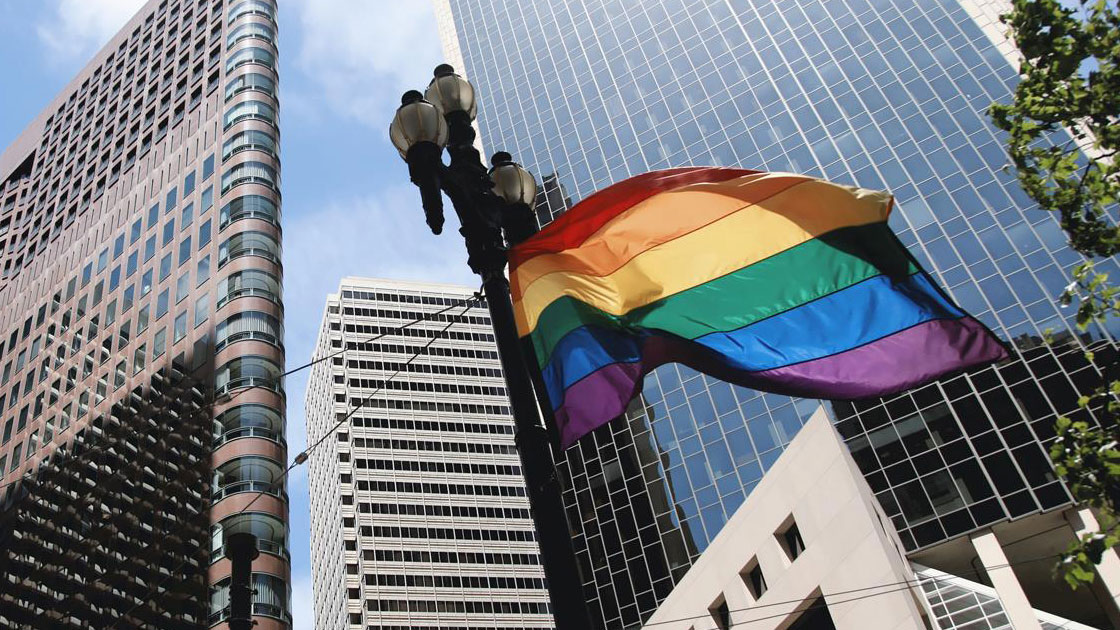
| In addition to strengthening company policies, leaders can make the workplace more comfortable for LGBTQ+ employees by displaying visible symbols of support and encouraging employees to do the same—during Pride month and beyond. One example: ally stickers displayed on employee laptops and office doors throughout the company can be incredibly powerful signals year-round. |
| Haven’t returned to the office? Consider a pin or a virtual background. |
| — Edited by Julia Arnous, an editor in McKinsey’s Boston office |
|
| Click to subscribe to this weekly newsletter |
|
|
Did you enjoy this newsletter? Forward it to colleagues and friends so they can subscribe too.
Was this issue forwarded to you? Sign up for it and sample our 40+ other free email subscriptions here.
|
|
|
Copyright © 2021 | McKinsey & Company, 3 World Trade Center, 175 Greenwich Street, New York, NY 10007
|
|
|